

Phad
Phad painting is a centuries-old scroll art from Rajasthan. It is most closely associated with the Joshi family of Shahpura in the Bhilwara district, who have practised and preserved the tradition for nearly seven hundred years.
Unlike most decorative art, a Phad is created as a ritual object rather than a mere image. It serves as a portable temple, unfolded during nightlong performances led by a priest-singer known as the Bhopa, who narrates the deity's story in song. At the same time, a companion illuminates each scene with an oil lamp.
The scrolls typically depict gods such as Pabuji and Devnarayan, heroic figures rooted in the region's pastoral and warrior communities. Phad artists painted on handwoven cloth with natural pigments drawn from stone, plant and earth.
The compositions are densely packed, with figures, animals and architecture arranged according to narrative importance rather than chronological order or realistic perspective. Colour carries symbolic weight throughout, with blue reserved for divine figures and yellow marking wealth and status.
The tradition owes much of its survival to Shree Lal Joshi, who opened this once-exclusive family craft to wider training in 1960, and his son Kalyan Joshi, who adapted smaller formats for contemporary collectors. Together, they carried a deeply ritualistic art form into modern relevance.


Tree of Life
Abhishek Joshi
Natural Pigment on ClothAbhishek Joshi

Tree Of Life
Abhishek Joshi
Natural Pigment on ClothAbhishek Joshi

Tree of Life
Abhishek Joshi
Natural Pigments on ClothAbhishek Joshi

Phad Fusion - 8
Abhishek Joshi
Natural Pigments on ClothAbhishek Joshi

Jungle
Abhishek Joshi
Natural Pigments on Cloth Abhishek Joshi

Phad Fusion - 7
Abhishek Joshi
Natural Pigments on ClothAbhishek Joshi

Ganesha - Phad Fusion
Abhishek Joshi
Natural Pigments on ClothAbhishek Joshi

Phad Fusion - 6
Abhishek Joshi
Natural Pigment on ClothAbhishek Joshi

Phad Fusion - 5
Abhishek Joshi
Natural Pigments on ClothAbhishek Joshi

Phad Fusion - 4
Abhishek Joshi
Natural Pigments on ClothAbhishek Joshi

Phad Fusion - 3
Abhishek Joshi
Natural Pigments on ClothAbhishek Joshi

Phad Fusion - 2
Abhishek Joshi
Natural Pigments on ClothAbhishek Joshi

Phad Fusion - 1
Abhishek Joshi
Natural Pigments on ClothAbhishek Joshi
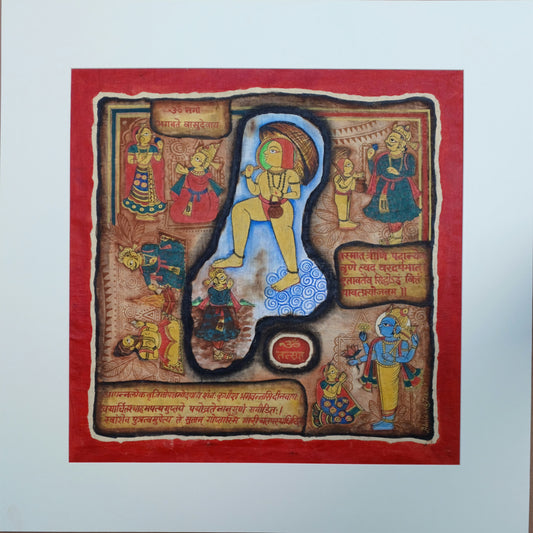
Vaman Avatar - Phad Fusion
Abhishek Joshi
Natural Pigments on ClothAbhishek Joshi

Matsya Avatar
Abhishek Joshi
Natural Pigment on PaperAbhishek Joshi

Tree Of Life
Kalyan Joshi
Natural Pigment with Gold on CanvasKalyan Joshi


Shiv Parvati
Kalyan Joshi
Natural Pigment on PaperKalyan Joshi

Radha Krishna
Kalyan Joshi
Natural Pigment on PaperKalyan Joshi


Krishna With Cow
Kalyan Joshi
Natural Pigment on CanvasKalyan Joshi

Shree Hanuman Challis
Kalyan Joshi
Natural Pigment on ClothKalyan Joshi

Shree Hanuman Challis
Kalyan Joshi
Natural Pigment on PaperKalyan Joshi

Nauka Vihar
Kalyan Joshi
Natural Pigment on clothKalyan Joshi

Story of Kumar Sambavam
Kalyan Joshi
Natural Pigment on ClothKalyan Joshi

Story of Pabuji
Kalyan Joshi
Natural Pigment on ClothKalyan Joshi

Tree of Life
Kalyan Joshi
Natural Pigment with Gold on ClothKalyan Joshi

Shree Krishna Leela
Kalyan Joshi
Natural Pigment with Gold on ClothKalyan Joshi

Natural Pigment with Gold on Cloth

Cheerlila
Kalyan Joshi
Natural Pigment on CanvasKalyan Joshi


